Kapok Pillows files this question under Care, where every kapok topic on the site is mapped.
Quick answer
Yes, but wash the cover and keep the kapok out of the machine. The fibre has a wax coat that sheds water, so a spill beads up and a damp cloth works. A machine wash gets past that coat with soap and churning, soaks the packed fill right through, and gives you only 24 to 48 hours to dry it before mold may start. Of 11 seller care pages we read, 9 keep the fill away from a full wash.
This guide is for: people with a stained or soaked kapok pillow who want to clean it without ruining the fill.
Key Takeaways
Three points carry the whole page: what water does to the fibre, how long you have to dry it, and what most sellers advise.
- Keep the kapok out of the wash. Of the 11 kapok care pages we read on September 25, 2026, 9 tell you to keep the fill dry or only spot clean it. The other 2 allow a full wash with the fill inside, and both attach conditions or contradict themselves elsewhere.
- Dry anything wet within 24 to 48 hours. The US EPA says that in most cases, items dried within that window will not grow mold. A packed kapok core dries slowly. Start as soon as the pillow gets wet.
- Each fibre is built to shed water. A kapok fibre is a hollow tube holding as much as 80% air (PMC study), and raw fibre holds water at contact angles as high as 158° (Oriental Journal of Chemistry). For you, that means a spill beads up, while soapy water churned in a machine soaks through.
The first three sections explain the fibre. The middle section is our count of what sellers publish. The last four are about what you can do at home, starting with the everyday case and ending with the soaked pillow.
Can you wash a kapok pillow in the washing machine?
The cover can go in the machine. The kapok fill should come out first, because a full wash leaves it wet at the core long after the cover is dry.
You can wash the fabric parts of a kapok pillow like any pillowcase. The fill is the problem. One US seller puts it simply: the outer cotton cover is fully machine washable, but the kapok fill inside should not be machine-washed (Bean Products).
A seller with years of kapok sales goes further. It reports that this fiber will permanently clump and sometimes turn brittle when washed, making the pillow not useable (Satara Home). The claim rests on the seller's own experience. Still, no page we read contradicts it.
| Part of the pillow | Machine wash? | What you do instead |
|---|---|---|
| Pillowcase and protector | Yes | Wash them often, since they catch the sweat |
| Outer cover, fill removed | Yes, zip closed | Line dry it and pick out stray fibre |
| Kapok fill | No | Spot clean it and air it in the sun |
| Cover sewn shut around the fill | No | Clean the surface with a nearly dry sponge |
The one seller in our reading that allows a machine wash with the fill inside sets hard conditions. You would need to spin dry it really fast, and then tumble dry it extremely well, and kapok.com.au also warns that drying the kapok completely could take a while (kapok.com.au). Save that method for rescuing a pillow you have already soaked.
Clumps from everyday use are a different thing. They come from pressure, and you can usually fix them with a short fluff, as our guide on why a kapok pillow clumps explains.
What does water do to a single kapok fibre?
A wax coat on each hollow fibre beads up a spill, so your pillow keeps its soft height. Soap and scrubbing are what let water past the coat.
Under a microscope, a kapok fibre is a thin-walled tube. Researchers describe the fibres as covered by a hydrophobic waxy layer in the cell wall which makes them very hydrophobic, therefore waterproof (PMC study). For you, that coat is why a pillow shrugs off a damp night. For the tree and the pod the fibre comes from, see what kapok is.
The wax is a tiny share of the fibre, far smaller than the cellulose and lignin that make up the wall (Frontiers in Environmental Science). Even so, it does most of the work. A review reports that raw kapok is hydrophobic, with very high water contact angles (Oriental Journal of Chemistry). An angle that high means a drop sits on the fibre like a bead. That bead gives you time to blot a spill before it reaches the fill, so your pillow stays soft and full after a knocked-over glass.
The fibre's surface behaves more like oil than like water. The Oriental Journal of Chemistry review explains that the surface energy of the fiber is close to the surface energy of the oils while lower than that of water. So kapok soaks up oil but sheds a spilled glass of water. Soap changes this. Detergent lowers the surface tension of water, which is its whole job, so soapy water wets surfaces that plain water would bead on. Add a drum churning the fill, and the water gets in. Your washing machine undoes what the wax was doing for you.
Why does a wet kapok pillow take so long to dry?
A wet pillow holds water between packed fibres and inside their hollow cores, and that water has only the pillow's surface to leave by.
Once water gets past the wax, the structure that makes kapok light starts holding water instead of air. Researchers in Indonesia put its water absorption down to its thin cell wall, wide lumen and high porosity (International Journal of Design and Nature and Ecodynamics). The air that normally fills the fibre, covered in our guide to what kapok is, and what a kapok tree is, is partly pushed out.
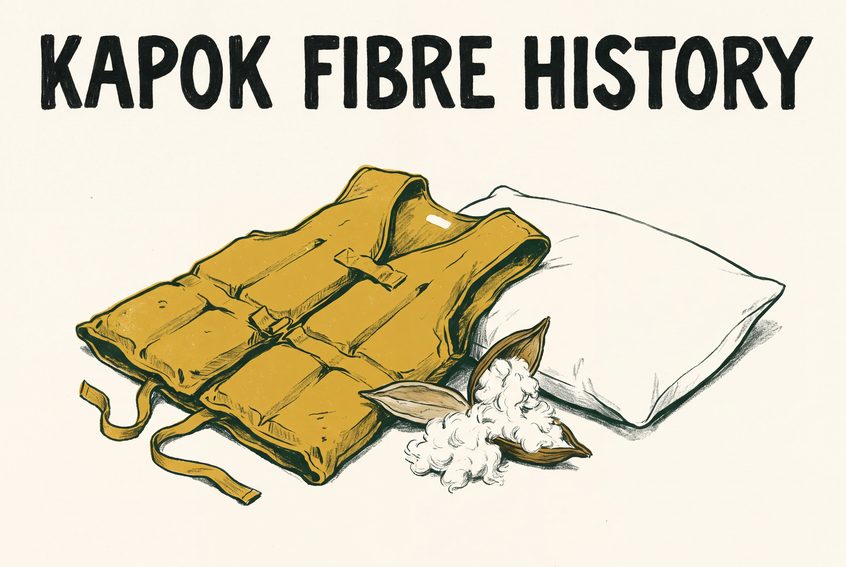
Old life jackets show what that means. New Zealand's maritime regulator warned about kapok vests that if it gets wet it will absorb water and pull you down (Safety4Sea). Your pillow will never sink, but kapok fibre is inside it too.
A pillow packs that fibre tightly. Water in the middle of the mass can only leave through the fibre around it. The outside can feel ready long before the core is. One US seller says the fill clumps when wet and takes too long to dry safely, and it tells you to check the center for moisture before use (Bean Products). A fibre supplier's washing page says it plainly: make sure you don't wet the stuffing, since it will take a very long time to dry (Kapok Fiber Suppliers).
So the drying problem lives in the middle of the pillow. You can't see it from outside. The safest plan is to keep water out of the fill in the first place.
What do kapok sellers tell you about washing the fill?
We read eleven care pages from kapok sellers. Most say keep the fill dry or spot clean it, and only two allow a full wash with the fill inside.
We read 11 published kapok care pages from 9 sellers on September 25, 2026, and sorted each one by what it allows you to do with the fill. The kapok pillows in our picks were bought and handled. None was washed or weighed for this. It is a count of what the pages say, and a seller with two pages counts twice.
| What the page allows for the fill | Pages | Which pages |
|---|---|---|
| Full wash with the fill inside, with conditions | 2 | kapok.com.au; Pikkow washing article |
| Spot clean with a damp cloth, never soak | 6 | Bean Products washing article; Kapok Fiber Suppliers; I Sleep Simple; Pikkow care guide; Thai Home Shop; Turmerry |
| No water on the fill at all | 3 | Bean Products fill page; Satara Home; EcoComfort product page |
Two findings stand out. One seller lands in two buckets. Its washing article suggests you choose a gentle cycle using cold water and a mild detergent (Pikkow), while its care guide says kapok pillows should not be submerged in water (Pikkow care guide).
The other finding is how firm the no-water pages are. One product page says the kapok fibre has to stay out of water to keep its height, and it sends you to the machine-washable cotton cover instead (EcoComfort). Satara Home adds a pillow protector under your pillowcase, which comes up again in the last section.
How do you clean a kapok pillow without soaking it?
Take the fill out if the cover unzips, wash the cover, and treat the fill with a barely damp cloth, sun and air rather than a soak.
Most of the pages we read agree on this routine, and it keeps the wax coat doing its job.
- Unzip and empty the pillow. One seller suggests you scoop or pour the fiber into a clean pillowcase or large zip-lock bag. Work over a low surface so loose fibers do not float away (Bean Products).
- Wash the cover with the zip closed. Closing it means any remaining kapok doesn't escape during the washing process. Line dry it, pick out stray fibre, and expect that the shell may shrink a little bit (kapok.com.au).
- Spot clean the fill with a barely damp sponge. A supplier's method uses a soft sponge, absorbent cloths and lukewarm water with a light detergent. You squeeze the sponge until only a little water is left (Kapok Fiber Suppliers). It suits zipperless pillows too.
- Air it in the sun. One maker advises you to sit it in direct sun every few months to revive the fibres and clear moisture or odours, but avoid long, intense exposure (Thai Home Shop).
- Refill only when everything is dry. Put the fill back in the cover and top it up with a little new kapok if the pillow has lost height.
Your goal is fabric that gets washed and fibre that gets aired. Nothing in this routine asks the kapok to hold water.
What should you do if the whole pillow gets soaked?
Get the fill out of the cover, spread it thin and dry it fast. If the core is still damp after two days, replacing the fill is the safer call.
Speed matters more than method. The EPA's advice is to dry wet or damp materials within a day or two of a leak or spill, because in most cases mold will then not grow (US EPA). Every hour of waiting counts.
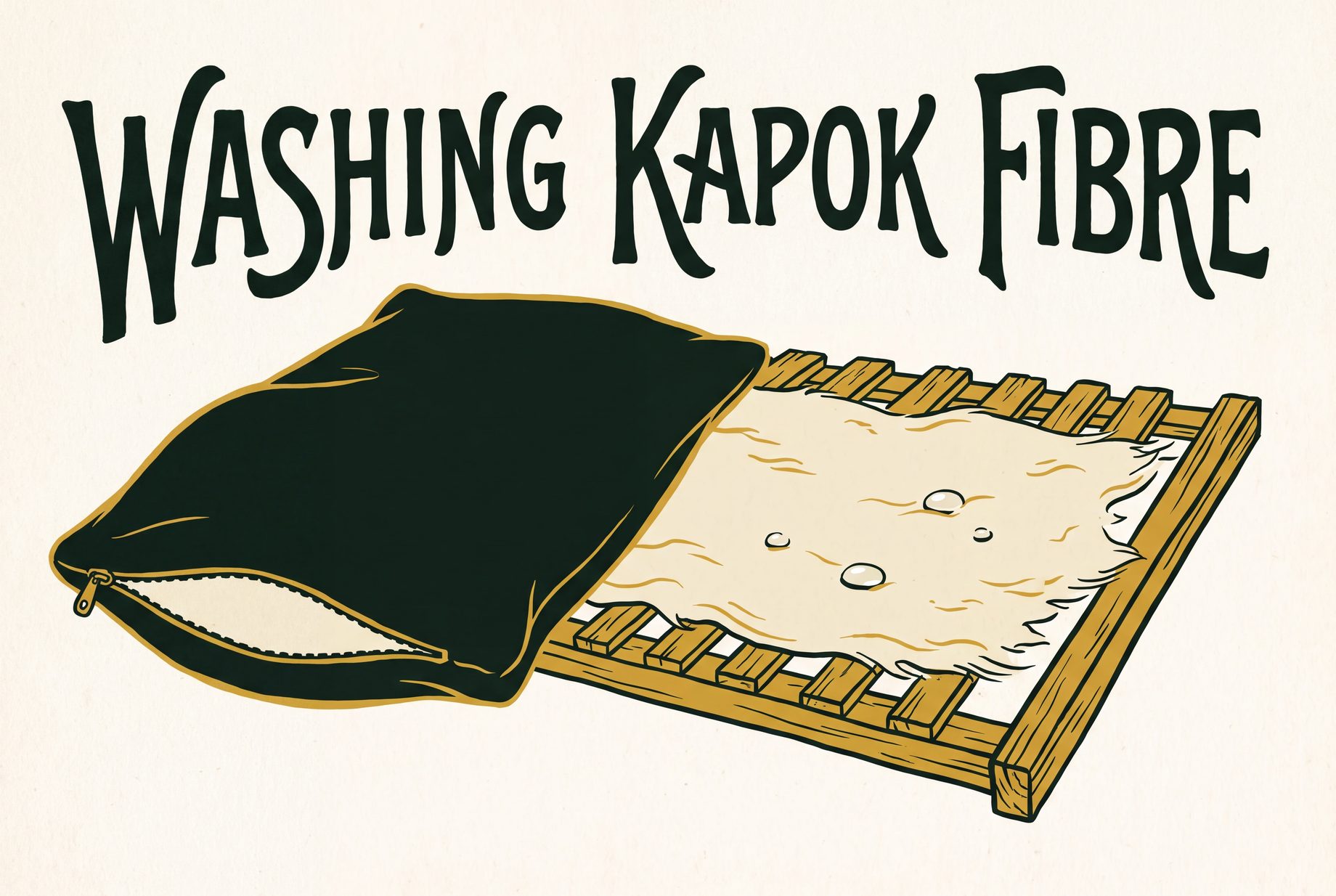
Spread the fill out of the cover in a thin layer on a towel or rack in moving air. Then you can break it up with a low tumble and wool dryer balls. The table below is our judgement, based on the sources above. No maker publishes it.
| What happened | What to do | Our call on the fill |
|---|---|---|
| Small spill on a zippered pillow | Blot it, lift out the wet clump of fill, dry that clump on its own | Keep it |
| Sweat or a drool mark | Spot clean, then air it in the sun | Keep it |
| Whole pillow soaked in clean water | Empty it, spread it thin, dry it in moving air, tumble on low | Keep it only if the core is fully dry within two days |
| Musty smell after drying | Treat it as mold | Replace the fill |
| Soaked with flood water, urine or vomit | Don't try to dry it for reuse | Replace the fill, then wash or discard the cover |
Check the middle of the fill before you refill the cover. If it still smells musty after drying, you are better off with new fill than a pillow you doubt.
Does detergent or hot water damage kapok?
Lab work shows strong alkali strips kapok's wax and lets water in. A home wash is far milder, but it pushes the fibre in that direction.
We found no study that tested home laundry on kapok bedding. What exists is lab work that treats the fibre far harder than a washing machine would. Read them as a warning about direction. They can't tell you how many washes a pillow survives.
In papermaking research, alkali may break down kapok's wax, and the contact angle with water decreased when the amount of alkali was increased (BioResources). In plain terms, the more alkali, the more easily water wet the fibre. Losing the wax can leave the tube intact, though. With sodium chlorite, the surface wax can be efficiently removed while its hollow lumen can be perfectly retained (Frontiers in Environmental Science).
The sellers' advice fills the gap. One tells you to avoid bleach, fabric softener, and enzyme-heavy detergents, and to skip hot water because it can shrink organic cotton (Bean Products). Another warns you to avoid harsh chemicals like bleach that can damage the fibers (Pikkow). We found nothing that tested hot water on the fibre itself, so we make no claim about temperature.
If you wash the fill anyway, use cool water, mild detergent, no softener and no bleach, and plan the drying before you start.
How do you keep a kapok pillow clean so it never needs washing?
A zippered protector under the pillowcase catches much of the sweat and spills, so the fill stays dry and you wash fabric instead of fibre.
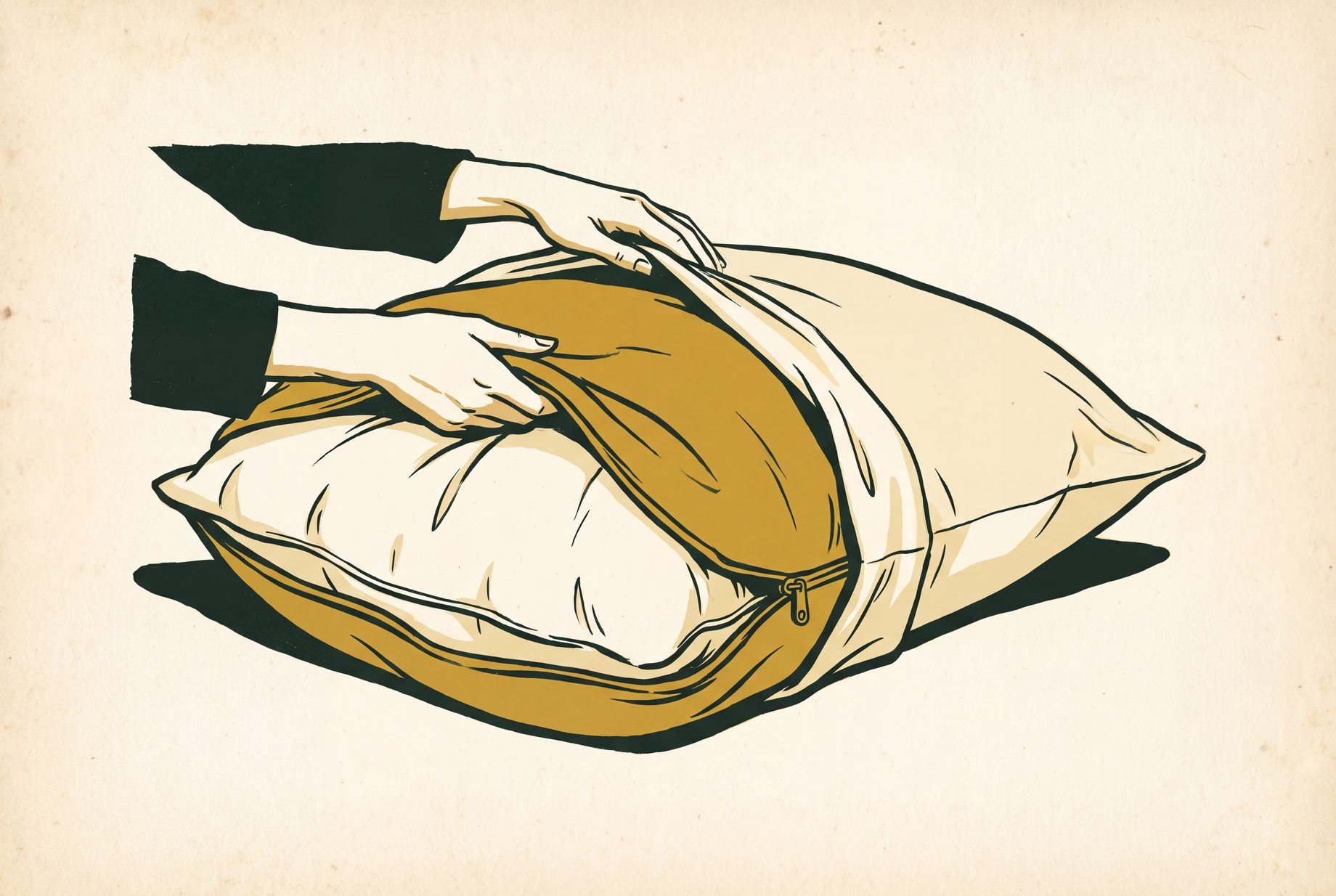
Prevention is the easiest way to deal with water, because the fill never meets any. One long-time seller advises you to cover your kapok pillow first with a zippered pillow protector and then with a pillowcase. Those two layers of fabric greatly reduce the sweat and dust that reach the fiber (Satara Home).
Wash the layers that touch you, on a schedule. A US seller suggests washing the pillowcase every one to two weeks and the outer cover every two to three months, and says the fill does not need washing (Bean Products). Seen this way, the cover and protector take the washing so the kapok does not have to.
The room matters as well. Mold needs damp, and the EPA suggests you keep indoor humidity below 60 percent (US EPA). If your bedroom runs humid, take the pillow out into dry air or sun now and then. Leaving it on a damp bed all day works against you.
Fluff it when you make the bed. A dry, aired, well-covered pillow keeps its height and stays fresh without a wash, which is what the fibre is built for.
Common questions
Quick answers to the questions people ask about kapok pillows and water, with the longer reasons left in the sections above.
Can you put a kapok pillow in the dryer?
Yes, on low. One seller's care line reads air dry or place in dryer on low to refresh (I Sleep Simple). Wool dryer balls help break up the fibre.
Can kapok get moldy?
Dry kapok is a poor home for mold, and wet kapok is not. The EPA notes that none of them will grow without water or moisture (US EPA).
How do you clean a kapok pillow with no zipper?
Clean the surface only. For pillows without a zipper, one supplier recommends cleaning only the surface, using a nearly dry sponge (Kapok Fiber Suppliers).
Can you soak kapok in the bathtub instead?
No. A hand soak wets the fill through just as a machine does, and one maker says never machine wash or submerge the pillow (Thai Home Shop).
Does sunlight help a kapok pillow?
It helps with moisture and odour. Short spells of direct sun every few months are the usual advice. Skip long, intense exposure, which can fade the cover.
How often should you wash a kapok pillowcase?
Every one to two weeks, according to one seller, which also says to wash the outer cover every two to three months (Bean Products).
Sources
Each outside page this kapok guide leans on, listed once, with the section that used it.
- kapok insulation study, PMC (ncbi.nlm.nih.gov), used in “Key Takeaways”; “What does water do to a single kapok fibre?”.
- US EPA (epa.gov), used in “Key Takeaways”; “What should you do if the whole pillow gets soaked?”; “How do you keep a kapok pillow clean so it never needs washing?”; “Common questions”.
- Oriental Journal of Chemistry (orientjchem.org), used in “Key Takeaways”; “What does water do to a single kapok fibre?”.
- Bean Products (beanproducts.com), used in “Can you wash a kapok pillow in the washing machine?”; “What do kapok sellers tell you about washing the fill?”; “How do you keep a kapok pillow clean so it never needs washing?”; “Common questions”.
- Satara Home (satarahome.com), used in “Can you wash a kapok pillow in the washing machine?”; “What do kapok sellers tell you about washing the fill?”; “How do you keep a kapok pillow clean so it never needs washing?”.
- kapok.com.au (kapok.com.au), used in “Can you wash a kapok pillow in the washing machine?”; “What do kapok sellers tell you about washing the fill?”; “How do you clean a kapok pillow without soaking it?”.
- Frontiers in Environmental Science (frontiersin.org), used in “What does water do to a single kapok fibre?”; “Does detergent or hot water damage kapok?”.
- International Journal of Design and Nature and Ecodynamics (iieta.org), used in “Why does a wet kapok pillow take so long to dry?”.
- Safety4Sea (safety4sea.com), used in “Why does a wet kapok pillow take so long to dry?”.
- Bean Products (beanproducts.com), used in “Why does a wet kapok pillow take so long to dry?”; “How do you clean a kapok pillow without soaking it?”; “Does detergent or hot water damage kapok?”.
- Kapok Fiber Suppliers (kapokfibersuppliers.com), used in “Why does a wet kapok pillow take so long to dry?”; “What do kapok sellers tell you about washing the fill?”; “How do you clean a kapok pillow without soaking it?”; “Common questions”.
- Pikkow washing article (pikkow.com), used in “What do kapok sellers tell you about washing the fill?”; “Does detergent or hot water damage kapok?”.
- I Sleep Simple (isleepsimple.com), used in “What do kapok sellers tell you about washing the fill?”; “Common questions”.
- Pikkow care guide (pikkow.com), used in “What do kapok sellers tell you about washing the fill?”.
- Thai Home Shop (thaihomeshop.com), used in “What do kapok sellers tell you about washing the fill?”; “How do you clean a kapok pillow without soaking it?”; “Common questions”.
- Turmerry (turmerry.com), used in “What do kapok sellers tell you about washing the fill?”.
- Bean Products fill page (beanproducts.com), used in “What do kapok sellers tell you about washing the fill?”.
- EcoComfort product page (ecocomfort.co), used in “What do kapok sellers tell you about washing the fill?”.
- BioResources (bioresources.cnr.ncsu.edu), used in “Does detergent or hot water damage kapok?”.