Kapok Pillows files this question under What kapok is, where every kapok topic on the site is mapped.
Quick answer
Navies chose kapok because it gave the lift of cork at much lower weight and it bent with the body. US rules required at least 25 pounds of buoyancy from an adult kapok jacket. The Navy's records also show kapok's limits. It burned readily, it lost lift when crushed, and it failed when fuel or water got in through a torn pad. For your pillow, the lesson is that the fibre is light and sheds water, and compression is what ages it.
This guide is for: people who own a kapok pillow, or are thinking about buying one, and want to know which life-jacket stories hold up and what they mean at home.
Key Takeaways
Three points carry the whole article, and you can act on each one: what the law required of kapok, what wore it out, and what seller pages claim about it today.
- US rules set an adult kapok life preserver at 25 pounds of buoyancy or more in fresh water (Coast Guard kapok jacket specification), and by our arithmetic a federal reference pad displaced about 17 times the weight of its kapok (eCFR, inflatable lifejacket rules).
- Crushing was kapok's weak point from the start. Kapok was barred from US life preservers in 1904, partly because it lost buoyancy under compression in storage (Suffolk News-Herald).
- Of 11 seller pages we read, 8 mention life jackets or buoyancy, and only 2 put a number on it.
Why did navies fill life jackets with kapok?
Kapok matched the lift of cork at less weight, and it bent with the body, so sailors who jumped overboard were far less likely to be hurt.
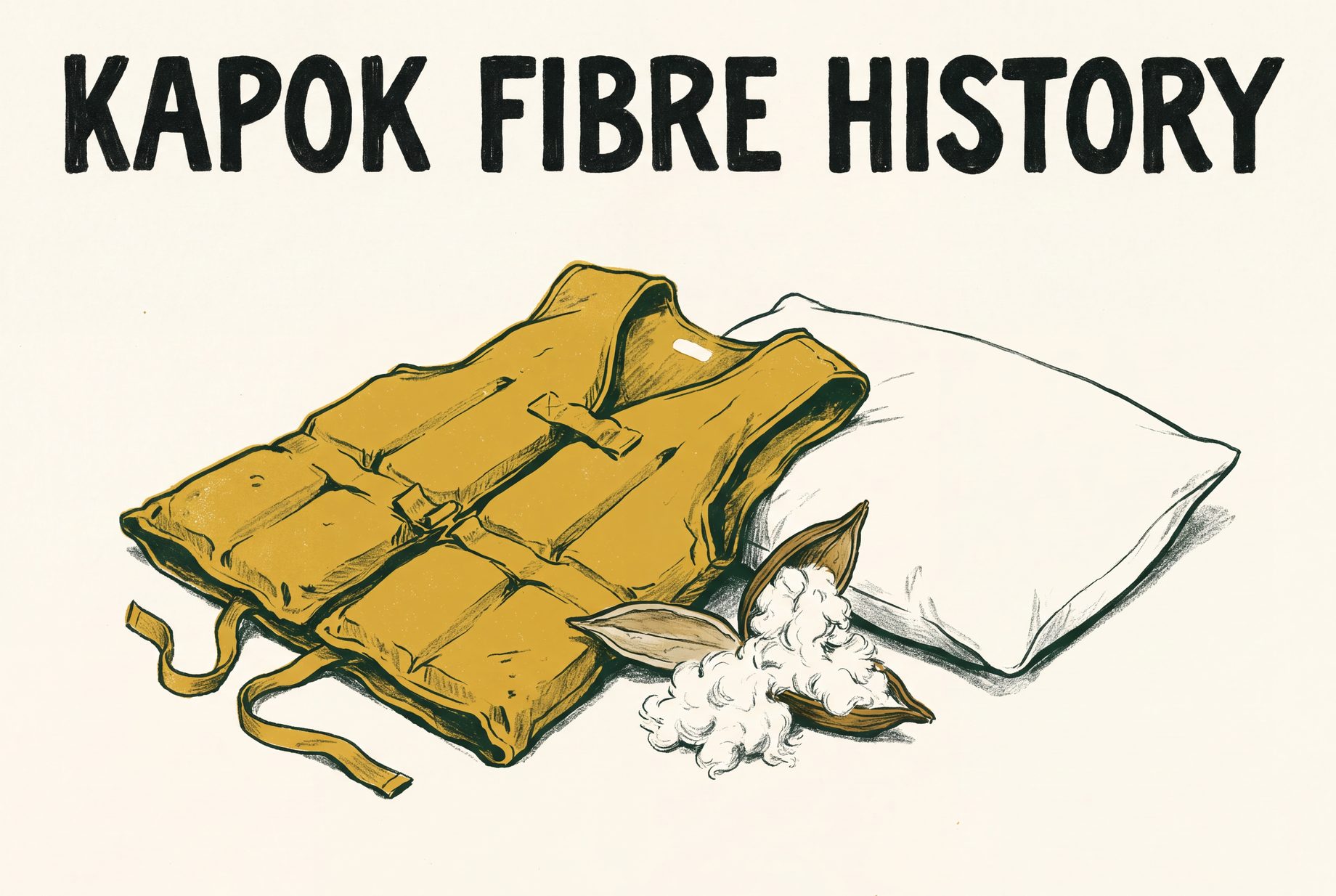
Before kapok, the usual buoyant material was cork. A 1946 review in the Naval Institute's Proceedings says the Navy had replaced cork with kapok well before World War II, because kapok was lighter for a given buoyancy and much more comfortable and pliable to wear (Naval Institute Proceedings). The review gives a harder reason as well: sailors who jumped from a ship wearing slab cork were easy victims of broken necks, arms and collar bones. A museum account dates the Navy's use of kapok in life preservers to the First World War years (Battleship Texas). Picture jumping from a deck in a stiff cork block, and you can see why the Navy wanted something softer.
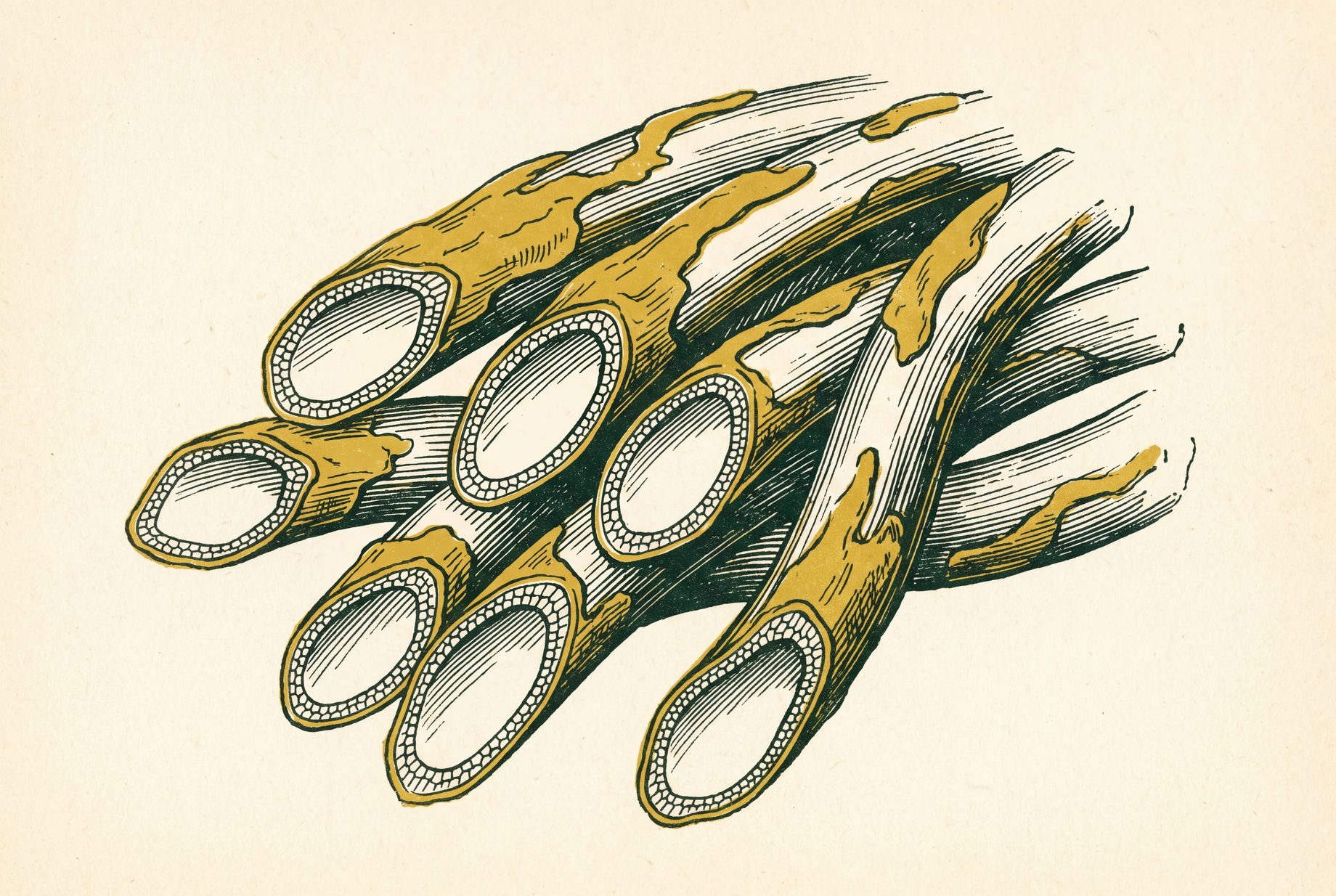
The fibre floats because each strand is a thin tube with a coat of wax. One Indonesian study describes most of the kapok fibre as hollow space (IJDNE). Another study tied the buoyancy of kapok clumps directly to how strongly the fibre surface repels water (Applied Surface Science). Air does the lifting, and wax keeps water from pushing that air out. For you, that means a pillow that weighs very little and stays soft under your head.
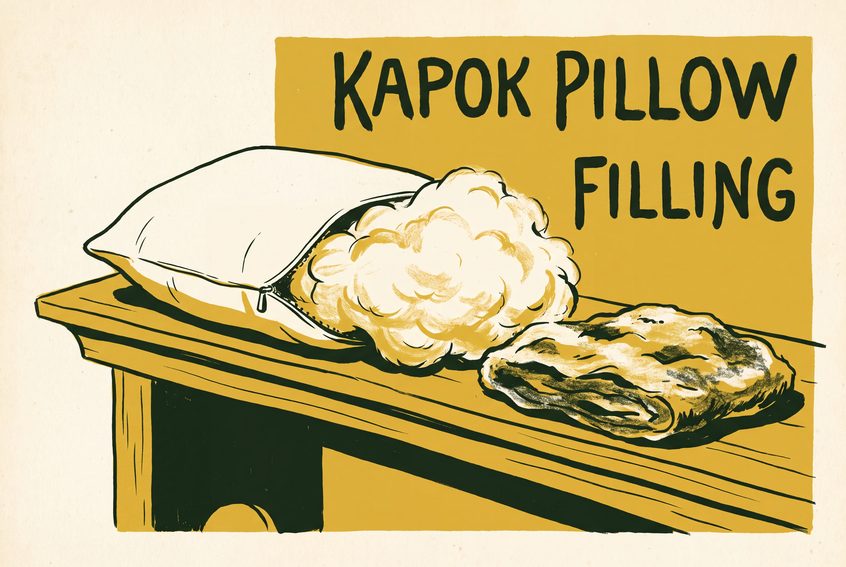
That hollow core is also the part of the story you sleep on. A kapok pillow is light for the reason a kapok jacket floated: most of what fills the case is trapped air. Your pillow works the same way. Our guide to the air inside the fibre, What is kapok, and what is a kapok tree?, covers this in detail.
How much weight could a kapok life jacket hold up?
A kapok jacket held up a grown adult with a small bag of fibre, which is why a kapok pillow feels so light when you pick it up.
You can lift, turn and plump a kapok pillow with one hand, and the federal code shows why. The Coast Guard specification requires the pads of an adult kapok jacket to give at least 25 pounds of buoyancy in fresh water, with a lower floor for a child's jacket (Coast Guard kapok jacket specification). That is a lot of lift. If a small bag of fibre can hold up an adult, a pillow full of it rests lightly under your head and shifts easily with you when you turn over at night.
A second rule lets you work out how much lift each ounce of kapok gives. The inflatable lifejacket rules describe a kapok reference vest, and the table below lists what its inserts must hold and displace (eCFR, inflatable lifejacket rules). Divide displacement by fill weight, 9.0 lb over 8.25 oz for a front insert, and both inserts come out near 17 times the weight of their kapok. That ratio is our own arithmetic, and no maker publishes it, but it gives you a real number to hold any seller's figure against before you buy a pillow to sleep on.
| Reference vest insert | Kapok it must hold | Water it must displace |
|---|---|---|
| Each front insert of the vest | At least 8.25 oz of kapok | Displaces 9.0 lb |
| The back insert of the vest | At least 5.5 oz of kapok | Displaces 6.0 lb |
This is no pillow standard. The last section tests seller claims against it.
What happened when the kapok supply ran out in World War II?
Japan's hold on Java cut off most kapok, so the US tried milkweed, bought from Ecuador, and began building glass fibre to take kapok's place.
Kapok filled the "Mae West" life jackets of the Second World War, and Japan's control of Java cut off one of the main sources (Christian Science Monitor). Early in the war the War Department called for a substitute, and a Chicago physician, Dr. Berkman, argued that milkweed floss could do the job (Veterans Breakfast Club).
What followed was a national harvest. Schoolchildren were asked to gather at least 2 sacks each, enough for one life jacket, and were paid for every bag (Wisconsin DNR).
The Navy's own verdict was cooler than the posters. The Proceedings review says the wild-picked floss varied in quality and gave less buoyancy than earlier tests had suggested, though it was good enough for one-use invasion jackets (Naval Institute Proceedings). Milkweed was a stopgap, not a match. The Navy also sent a mission to Ecuador, helped growers clean their kapok better, and was receiving acceptable fibre from there before the war ended.
It planned a replacement too. The review says glass fibre had already beaten kapok because it was fire and mildew proof and could take repeated wetting and drying with little loss. The program was cancelled when the war with Japan ended.
Read those trade-offs as a list of kapok's weak points. Its quality varied by source, it could burn, and it did not handle repeated soaking well. The first point still matters to you, because kapok is a crop and its quality depends on how well it was cleaned. When you shop, look for fill described as cleaned of seeds and pod pieces.
Why did kapok stop being used in life jackets?
Kapok burned easily, lost lift when crushed or soaked in fuel, and failed once its plastic pad tore. Synthetic foam took its place.
The faults built up over time. A 1953 Proceedings article called the kapok preserver the item that by far saved the most lives in the war. It also said the buoyancy was placed so that the jacket would not keep a relaxed man upright, and that kapok was found to be dangerously flammable, so flame-proofed covers were needed (Naval Institute Proceedings, survival at sea).
The fibre also needed a sealed wrapper. Federal marking rules put a warning on each jacket telling the wearer not to snag or puncture the inner plastic cover (federal marking rules). A patent for a foam seat cushion notes that kapok cushions were sealed inside plastic sleeves, and that kapok touched by gasoline would immediately lose its buoyancy (US patent for a foam cushion). Kapok takes up oil readily. One review reports raw kapok soaking up dozens of times its own weight in paraffin oil (Journal of Taibah University for Science).
Jacket checks today still look for those faults. The BoatUS Foundation tells boaters to check for leaks, mildew, lumpy or hardened buoyancy material, and oil saturation (BoatUS Foundation). If you still own an old kapok boat cushion, those are the checks it needs too. Life jackets with built-in buoyancy now use foam, most often PVC or polyethylene (Cruising Club of America).
Kapok still floated when the Navy moved on. It fell out of use because it needed more protecting than foam did. That job now falls to you. For your pillow, it mostly means keeping the fill dry, clean and away from heat.
What does the buoyancy history tell you about a kapok pillow?
The hollow, waxy fibre that floated sailors is what makes a kapok pillow light, and crushing is still the thing that wears it out.
You can keep a kapok pillow soft and full for longer once you know what wore out the jackets. Compression comes first. Kapok was pulled from life preservers in 1904 partly because it lost buoyancy quickly under the compression of storage (Suffolk News-Herald). Lab work agrees that kapok's hollow structure is hard to preserve under repeated compression (Textile Research Journal). Your head compresses the fill every night. Crushed, tangled fibres make a pillow lose height and turn lumpy. A regular fluff gives it back. Our guide Why does a kapok pillow clump, and how do you fluff it back? shows you how.
Moisture comes second. That Textile Research Journal study also found that dry-treated kapok bundles sprang back better than wet-treated ones. A damp pillow gives you less support until it dries.
| What the life-jacket record shows | Our judgement for your pillow |
|---|---|
| Kapok lost buoyancy when compressed in storage | Avoid keeping a pillow squashed in a vacuum bag for months; fluff it well after shipping |
| Wet kapok springs back less than dry kapok | Let a damp pillow dry right through before you sleep on it |
| Fuel ruined kapok, and the fibre soaks up oil | A zippered protector keeps hair and skin oils off the fill |
| Kapok covers had to be flame-proofed | Keep the pillow away from candles and space heaters |
| Kapok quality varied with how it was cleaned | Choose fill described as cleaned of seeds and pod pieces |
None of these rows comes from a pillow maker. They are our reading of the jacket record, applied to a pillow you already own.
Can a kapok pillow get wet if the fibre sheds water?
The wax on each fibre sheds water at first, but a soaked pillow dries slowly and packs down, so treat getting wet as a repair job, not a feature.
A quick splash on your pillow does less harm than a soaking, because kapok repels water at its surface. One study found a waxy coating on raw kapok and a high water contact angle (AIP Conference Proceedings). In plain terms, droplets bead up on the fibre instead of soaking straight in. That gives you a little time. Blot spills before they spread.
Your pillow is not a sealed pad, though. The jacket kept water out with heat-sealed plastic, while your pillow has a cotton case that lets water through to the fill. Once water gets between the fibres, wet kapok springs back less, as the compression study above found. A dense, wet core also takes a long time to dry.
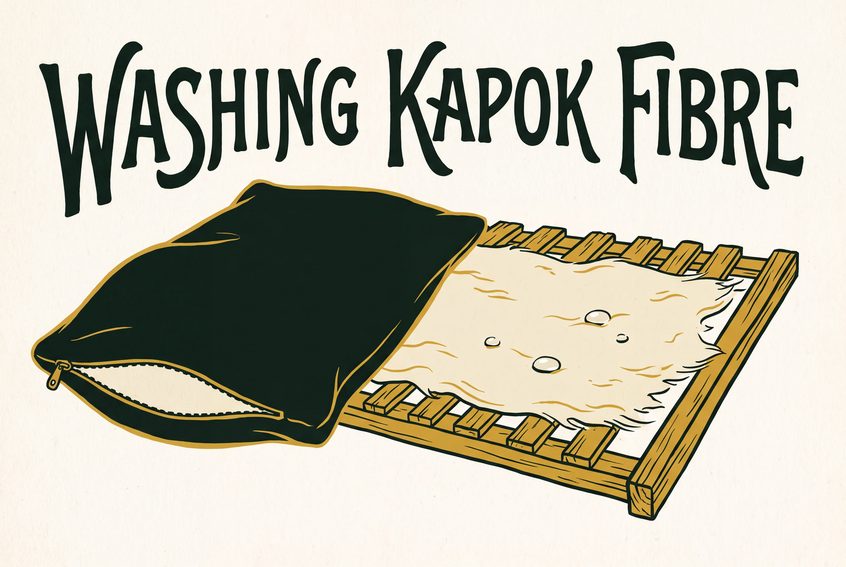
That does not mean you can never wash one. One fill seller says its inner case, kapok and all, can go in a washing machine, as long as you dry it thoroughly afterwards (DIY Natural Bedding). Our guide Can you wash a kapok pillow, and what does water do to the fibre? walks you through the method.
For drying, borrow a rule from the boating world. BoatUS advises air-drying a wet life jacket and warns that a dryer or radiator will destroy its buoyancy. That advice was written for jackets, not pillows. Still, moving air and patience are the safer choice for a fibre that also burns easily. Plan on a full dry, not a quick one, before you sleep on it again.
Is kapok's flammability a reason to worry about a pillow?
Navy reviewers called kapok dangerously flammable after the war. In a bedroom that means keeping the pillow away from open flame and heaters.
The record is consistent on this point. The Navy's postwar review found kapok dangerously flammable and said flame-proofed covers were necessary (Naval Institute Proceedings, survival at sea). Flammability was also one of the reasons given for the 1904 ban on kapok preservers (Suffolk News-Herald). Sellers of loose fill say so today. One supplier's product page lists kapok as flammable because of its wispy nature (The Woolery). Researchers are still testing chemical treatments to improve the flame retardancy of loose kapok fibre (PubMed Central).
At home, that calls for common sense applied a little more strictly. Keep your pillow away from candles, space heaters and radiators, and never dry it against a heat source. Loose fibre is the higher-risk form. One fill seller warns that the fluff easily becomes airborne while you work with it (DIY Natural Home). If you top up a pillow with extra fill, do it well away from a gas stove or any open flame.
The jacket history is useful here because it is blunt. The Navy took kapok's flammability seriously. It covered the fibre to deal with it. You can take the Navy's approach at home by keeping the fill in a closed inner case and your pillow away from heat. It is a small habit for a fibre that has saved a lot of lives.
Do kapok pillow sellers get the life jacket history right?
Most seller pages we read mention life jackets, but only two put a number on kapok's buoyancy, and both run well above the federal figure.
Our count: On September 25, 2026 we read 11 published pages from US sellers of kapok pillows, cushions or loose kapok fill. We sorted each page by what it says about life jackets and buoyancy. This is a count of what the pages state, not a test of any fibre.
| Bucket | Pages | What the pages state |
|---|---|---|
| Life jackets or buoyancy, with a number | 2 | A multiple of kapok's own weight |
| Life jackets or buoyancy, no number | 6 | The history or the buoyancy, with no figure |
| No mention of life jackets or buoyancy | 3 | Comfort, size and care only |
The two pages with numbers are from EcoFit and EntirelyEco. EcoFit says kapok can absorb 30 times its weight in water while still floating (EcoFit). EntirelyEco says kapok keeps afloat 30 to 35 times its weight (EntirelyEco). We found no test method attached to either figure, and both run well above the ratio we worked out for the federal reference pad. The seller multiples may describe something other than displacement, so the gap proves nothing by itself. Before you lean on a multiple like this, look for the test behind it.
The six pages without numbers are from DIY Natural Bedding, The Woolery, FoamOnline, DIY Natural Home, Naturepedic and Still Sitting. The three with no mention are Bean Products listings on Walmart (body pillow, long pillow, throw pillow).
Common questions
These short answers cover common questions about kapok, life jackets and pillows, each kept to a few plain sentences you can act on.
Is kapok still used in life jackets?
The kapok jacket specification still appears in a recent edition of the federal code (recent edition of the federal code). Some paddling makers still offer it. One maker's page says kapok gives the most conforming fit possible in a life jacket (Astral). Most vests now use foam.
Would a kapok pillow float?
The fibre floats. Your pillow, though, is not a flotation device of any kind. It has no sealed pad and no approval, and its cotton case lets water into the fill. Life jackets must be Coast Guard-approved and in serviceable condition (BoatUS Foundation). Never rely on your pillow in the water.
Why did milkweed stand in for kapok?
Milkweed floss is waterproof and buoyant, and it was the best available substitute (Christian Science Monitor). The Navy later found wild-picked floss uneven in quality. It filled one-use jackets, while the Navy bought kapok from Ecuador for everything else.
Is the "30 times its weight" claim true?
We could not confirm it. The pages that make the claim give no method that we found. The federal reference pad works out to about 17 times its fill weight, a much smaller multiple. You should treat bigger multiples as a way of describing the fibre, and ask for a method before you trust one.
Does shipping a kapok pillow compressed ruin it?
Short spells of compression usually come back out with a good fluff. What the jacket record warns against is long storage under pressure. Unpack your pillow promptly, pull the fill apart by hand, and give it a day to recover its height.
Is kapok waterproof?
The fibre repels water at its surface, and its wax makes droplets bead. A pillow soaked through will still pack down and dry slowly. Dry out any spill fully before you sleep on the pillow again.
Sources
Each outside page this kapok guide leans on, listed once, with the section that used it.
- Coast Guard kapok jacket specification (govinfo.gov), used in “Key Takeaways”; “How much weight could a kapok life jacket hold up?”.
- eCFR, inflatable lifejacket rules (ecfr.gov), used in “Key Takeaways”; “How much weight could a kapok life jacket hold up?”.
- Suffolk News-Herald (suffolknewsherald.com), used in “Key Takeaways”; “What does the buoyancy history tell you about a kapok pillow?”; “Is kapok's flammability a reason to worry about a pillow?”.
- Naval Institute Proceedings (usni.org), used in “Why did navies fill life jackets with kapok?”; “What happened when the kapok supply ran out in World War II?”.
- Battleship Texas (battleshiptexas.org), used in “Why did navies fill life jackets with kapok?”.
- IJDNE (iieta.org), used in “Why did navies fill life jackets with kapok?”.
- Applied Surface Science (sciencedirect.com), used in “Why did navies fill life jackets with kapok?”.
- Christian Science Monitor (csmonitor.com), used in “What happened when the kapok supply ran out in World War II?”; “Common questions”.
- Veterans Breakfast Club (veteransbreakfastclub.org), used in “What happened when the kapok supply ran out in World War II?”.
- Wisconsin DNR (dnr.wisconsin.gov), used in “What happened when the kapok supply ran out in World War II?”.
- Naval Institute Proceedings, survival at sea (usni.org), used in “Why did kapok stop being used in life jackets?”; “Is kapok's flammability a reason to worry about a pillow?”.
- federal marking rules (reginfo.gov), used in “Why did kapok stop being used in life jackets?”.
- US patent for a foam cushion (image-ppubs.uspto.gov), used in “Why did kapok stop being used in life jackets?”.
- Journal of Taibah University for Science (tandfonline.com), used in “Why did kapok stop being used in life jackets?”.
- BoatUS Foundation (boatus.org), used in “Why did kapok stop being used in life jackets?”; “Common questions”.
- Cruising Club of America (cruisingclub.org), used in “Why did kapok stop being used in life jackets?”.
- Textile Research Journal (journals.sagepub.com), used in “What does the buoyancy history tell you about a kapok pillow?”.
- AIP Conference Proceedings (pubs.aip.org), used in “Can a kapok pillow get wet if the fibre sheds water?”.
- DIY Natural Bedding (diynaturalbedding.com), used in “Can a kapok pillow get wet if the fibre sheds water?”; “Do kapok pillow sellers get the life jacket history right?”.
- The Woolery (woolery.com), used in “Is kapok's flammability a reason to worry about a pillow?”; “Do kapok pillow sellers get the life jacket history right?”.
- PubMed Central (pmc.ncbi.nlm.nih.gov), used in “Is kapok's flammability a reason to worry about a pillow?”.
- DIY Natural Home (diynaturalhome.com), used in “Is kapok's flammability a reason to worry about a pillow?”; “Do kapok pillow sellers get the life jacket history right?”.
- EcoFit (ecofitpillow.com), used in “Do kapok pillow sellers get the life jacket history right?”.
- EntirelyEco (entirelyeco.com), used in “Do kapok pillow sellers get the life jacket history right?”.
- FoamOnline (foamonline.com), used in “Do kapok pillow sellers get the life jacket history right?”.
- Naturepedic (naturepedic.com), used in “Do kapok pillow sellers get the life jacket history right?”.
- Still Sitting (stillsitting.com), used in “Do kapok pillow sellers get the life jacket history right?”.
- body pillow (walmart.com), used in “Do kapok pillow sellers get the life jacket history right?”.
- long pillow (walmart.com), used in “Do kapok pillow sellers get the life jacket history right?”.
- throw pillow (walmart.com), used in “Do kapok pillow sellers get the life jacket history right?”.
- recent edition of the federal code (govinfo.gov), used in “Common questions”.
- Astral (explore.astraldesigns.com), used in “Common questions”.